Summary
As a water management practitioner, I want to create spaces where different stakeholders exchange knowledge, discuss and debate. This leads to participatory and democratic decision-making on the world’s growing environmental problems. Technical experts have made great progress with solutions for environmental degradation and climate adaptation, but more and more people see the limits of a purely technocratic approach to natural resources. At the same time, there is a growing awareness that we must include the experiences and insights of those most affected by climate change, such as farmers and fishers. This requires fair platforms for knowledge exchange and joint knowledge development, as the basis for a just path towards sustainability.
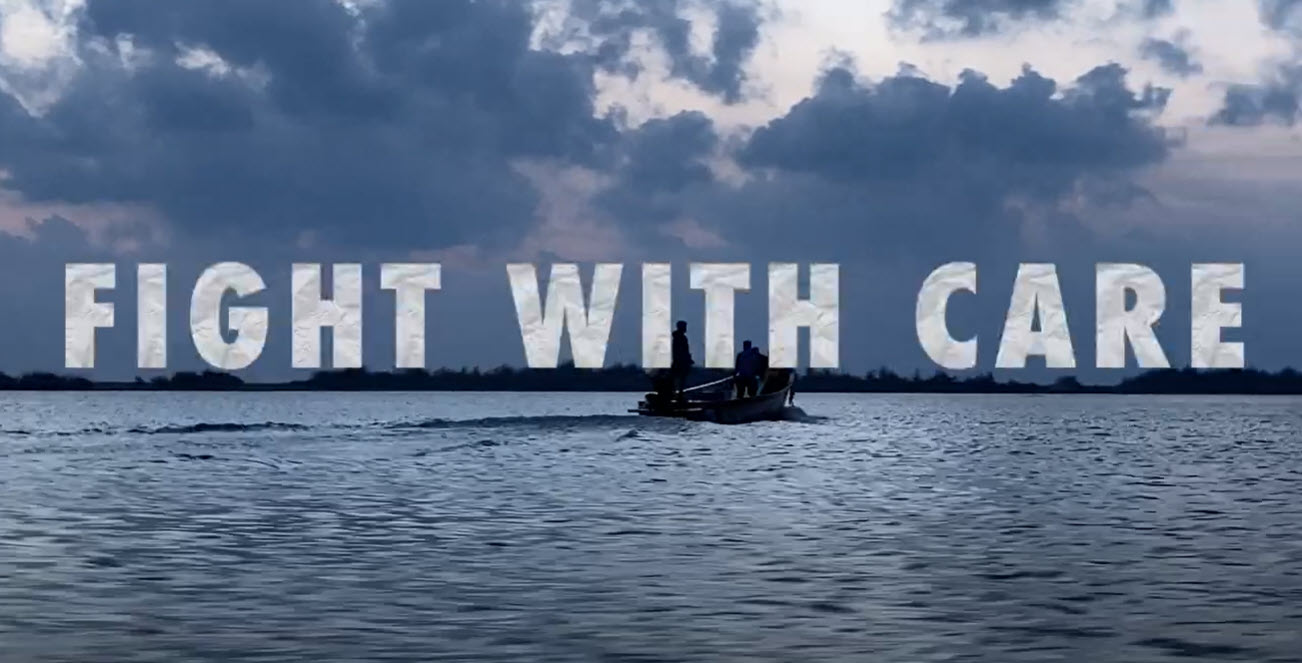
With that aim, my research at IHE Delft documented the experiences of women from indigenous fishing communities in protecting the coastal wetlands of Chennai in South India. I also want to set up an awareness campaign about the crucial role of coastal wetlands in flood management and food security, about the growing development pressure on the wetlands, and about the role of women from indigenous fishing communities in preserving them. To launch the campaign, I am making the film “Fight with Care” together with filmmaker Bhargav Prasad from Chennai.
The film
The film shows the lives of women from indigenous fishing communities who have lived in Chennai’s coastal wetlands for generations. It shows the many ways in which women contribute to small-scale fisheries and so support their families and communities, mostly through unpaid and undervalued work. Now that women from fishing communities are organising to stand up for the protection of the coastal area on which their livelihoods directly depend, their valuable insights deserve to be heard more widely.
“Fight with Care” has two main themes. The first is the increasing development pressure on Chennai’s fragile wetlands, such as illegal construction and industrial pollution, and the way local communities resist it. The second is the indispensable care work of women from indigenous communities, which has sustained life in the wetlands for generations and offers a different way of understanding and valuing the ecosystem.
What we want to achieve
With this film we want to amplify the voices of fisherwomen campaigning for the protection of Chennai’s wetlands. We also want to start a conversation about the value of wetlands, their rapid disappearance from the face of the earth and the consequences for climate change. Furthermore, we want to bring environmental justice and social justice closer together by addressing environmental degradation, economic growth, gender and caste together. A film like this can inspire transdisciplinary research on water and environmental management.