Summary
Over the past twenty years, a great deal of work has been done worldwide to improve access to clean water and sanitation, in line with UN goal SDG 6. Governments and NGOs gave priority to water, sanitation and hygiene (WASH) projects.
Water and sanitation is one of Rotary’s areas of focus, and Rotary is at the forefront of the fight for clean water, better sanitation and hygiene for all. Rotary has funded and implemented thousands of WASH projects worldwide, but keeping track of whether those facilities still work and are being used remains difficult. After handover there is often hardly any monitoring and evaluation, and when there is, it stops after a few months. This makes it hard to establish whether the facilities achieve their goal and really make a difference. The data needed to make important decisions or adjust strategy is often missing. As a result, many WASH projects have little impact, and some facilities worth millions of dollars are no longer used after just a few months.
The solution: AccessWASH
That is why I propose an open digital platform, AccessWASH, that:
- maps all WASH facilities built by Rotary, governments and other organisations;
- tracks whether these facilities work and are being used;
- shows access (population compared with available facilities and active WASH organisations), so it is quickly clear where the gaps and underserved areas are.
AccessWASH will also be a knowledge platform where WASH professionals and organisations showcase their work and share good practices. Stakeholders will see where facilities have been built and where gaps remain. Donors will see the impact of their contribution directly, whether it is a new facility or a hygiene training. Anomalies, such as a facility that no longer works or a sudden drop in use, are quickly spotted by managers so they can investigate and fix them.
Approach
AccessWASH is a web application, developed, tested and rolled out by a team of three: a full-stack software developer, a mobile developer and myself as WASH specialist providing content and strategic support. We first build and test a proof of concept with (1) a web application with a mapping module and a knowledge base of good practices, and (2) a mobile app for mapping WASH facilities in the field.
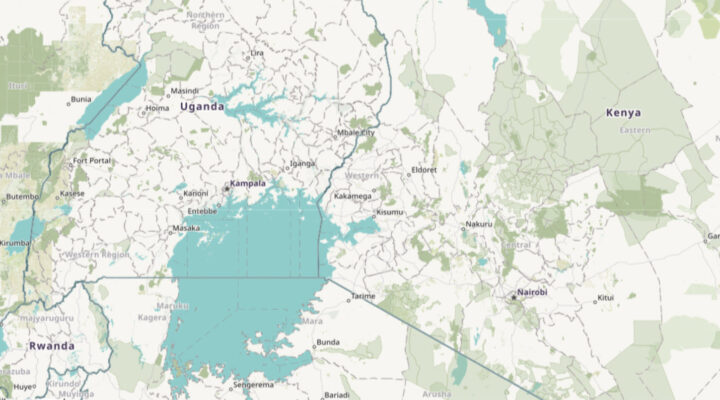
Development takes about twelve weeks. We then use the app to map at least 50 WASH facilities of Rotary District 9212 in Kenya and display them in AccessWASH. Each facility gets data such as a photo, its status and the number of users, supplemented with map layers such as population density, water sources, health centres and schools. Building, testing and rolling out the proof of concept requires € 2,500, for the team’s wages and the costs of infrastructure and start-up.
Result
The project was a success: see the result at accesswash.org.